Character workWorksheet
The actor's character breakdown worksheet
Seven questions that turn a role on the page into a specific person you can play, with the free one-page worksheet and a completed example.
A character breakdown worksheet does one job: it stops you from playing a "type" and helps you build a real, specific human being. The difference is everything. An actor who has made concrete choices plays something different from one who is playing "the girlfriend" or "the tough cop", and it shows. Here are the questions that matter, a free worksheet to run them on, and a completed example.
What's on the worksheet
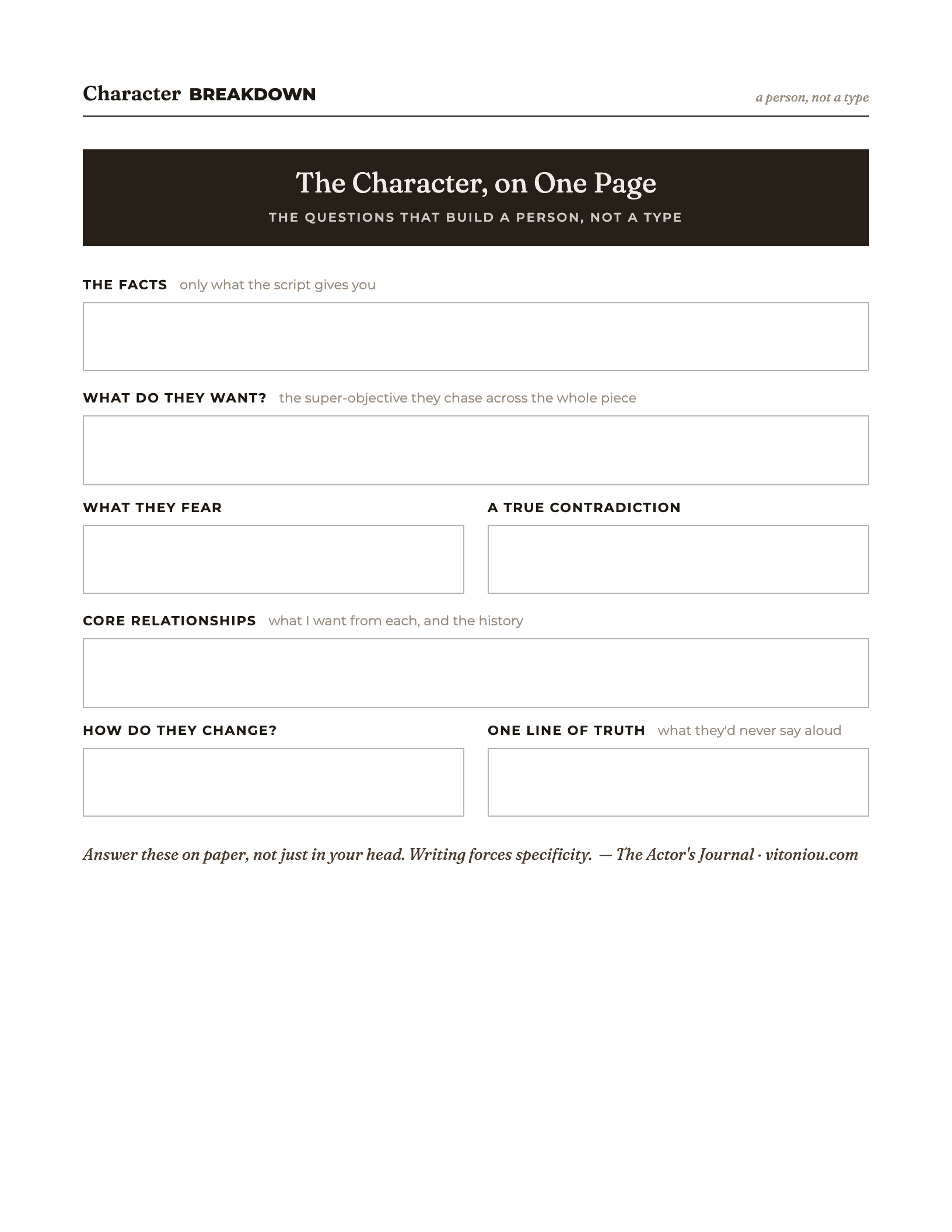
One page, seven boxes, in the order you'll fill them in:
- The facts: only what the script gives you.
- What they want: the super-objective they chase across the whole piece.
- What they fear.
- A true contradiction.
- Core relationships: what you want from each person, and the history.
- How they change.
- One line of truth: the thing they'd never say aloud.
The facts (start with what's true)
Before interpretation, gather the given: age, background, job, where they're from, education, the relationships named in the script. Don't invent yet. Collect what the writer gave you. This keeps your choices grounded in the actual story.
What do they want?
Your character's super-objective (the thing they're chasing across the whole piece) and how it shows up scene to scene. Everything specific flows from a specific want.
What are they afraid of?
Fear is often more revealing than desire. What would devastate this person? What are they protecting? The gap between what they want and what they fear is where the interesting acting lives.
Their core relationships
For each key relationship: what does my character want from this person, and what's the history? Relationships are where "playing a character" becomes "being in a scene."
Their contradictions
Real people aren't consistent. The tough one is tender, the confident one is terrified. Find at least one genuine contradiction. It's the fastest way to make a character feel human instead of flat.
How do they change?
Where does this person end up different from where they started? Naming the arc tells you what the story is doing through your character.
One line of truth
Finish with the sentence your character would never say out loud. You won't say it either, but knowing it gives you something to hold back, and holding something back is often what makes a scene play.
A completed example
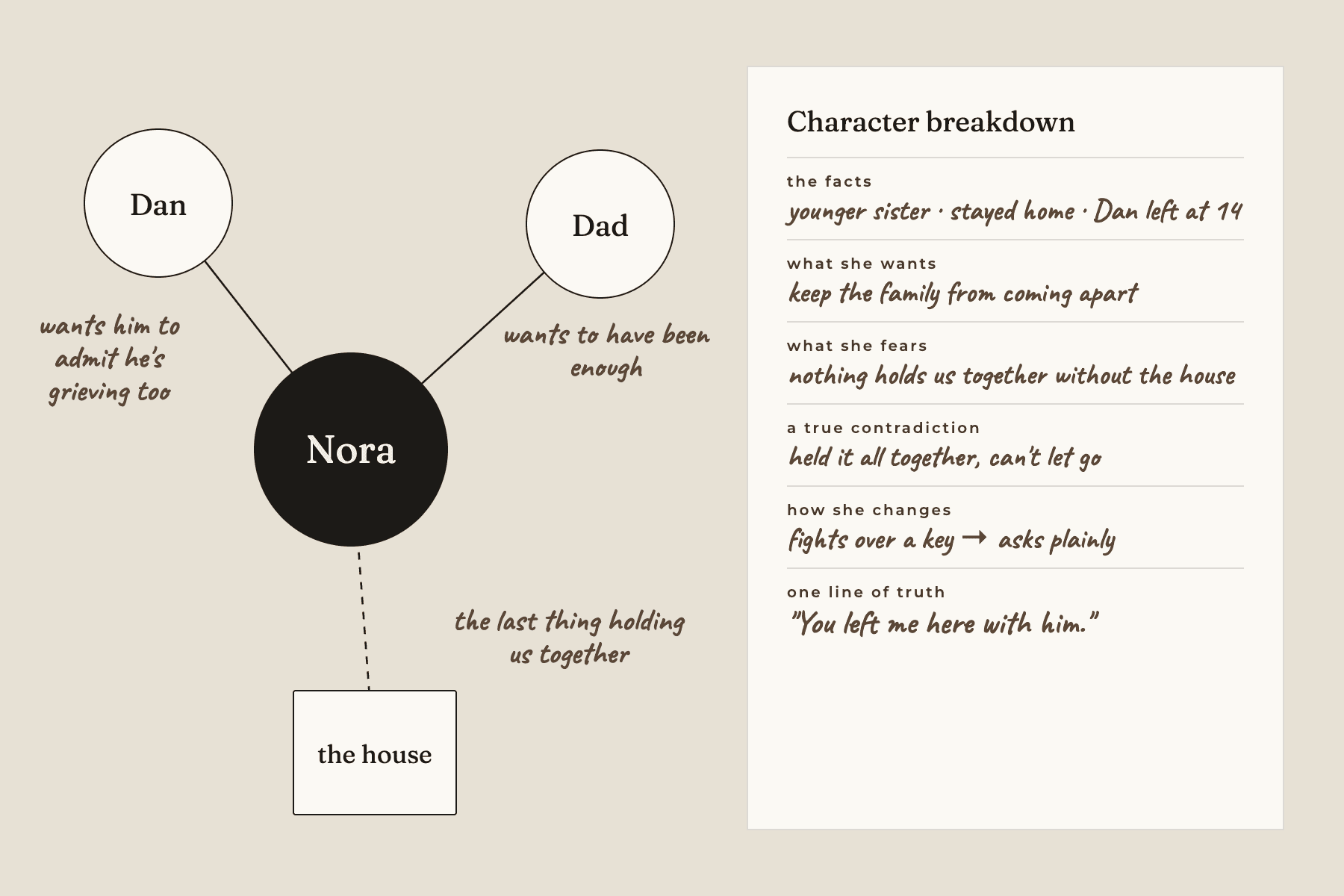
Here's the worksheet filled in for Nora, the sister from the sample scene in our scene breakdown guide. Facts come from the scene; everything else is a choice an actor might make.
Worked example · Nora
- The facts: Dan's younger sister. The family house is being handed over at 9 a.m. tomorrow. Their father measured them on the pantry door. Dan left home at fourteen; Nora stayed.
- What she wants: to keep her family from quietly coming apart.
- What she fears: that without the house, she and Dan have nothing that holds them together.
- A true contradiction: she's the one who stayed and held everything together, and she's the one who can't let go.
- Core relationships: Dan: she wants him to admit he's grieving too; he left when she needed him, and she's never said so. Her father: she wants to have been enough; the height marks are the last proof he paid attention.
- How she changes: from fighting over a key to asking plainly for what she needs.
- One line of truth: "You left me here with him."
Notice how much easier the scene becomes. The fear of having nothing holding them together explains why she won't give back the key, and the line of truth explains what she's not saying under every line she does say.
How to use it
Fill in the facts after your first read, and the rest after your second. Then come back to the worksheet after each rehearsal and change anything that no longer feels true. Treat it as a working document, not a test.
Questions
What is a character breakdown worksheet?
It's a structured set of questions an actor answers about a role (background, wants, fears, relationships, contradictions) to build a specific, three-dimensional person instead of a 'type.'
What questions should a character breakdown include?
The essentials: who am I (facts and background), what do I want in the story, what am I afraid of, my core relationships, my contradictions, and how I change. This guide walks through each one with an example.
Is the worksheet really free?
Yes. Enter your email on the worksheet's page and the PDF download appears straight away. Signing up also adds you to the Free Actor's Toolkit emails (one more printable every few days), which you can unsubscribe from at any time.
Written by
The people who design Vitoniou's journals and workbooks for actors and film creatives. We write these guides to teach the methods our printables are built around, and we update them when we improve them.
Read next
Scene studyGuide
How to break down a scene, step by step
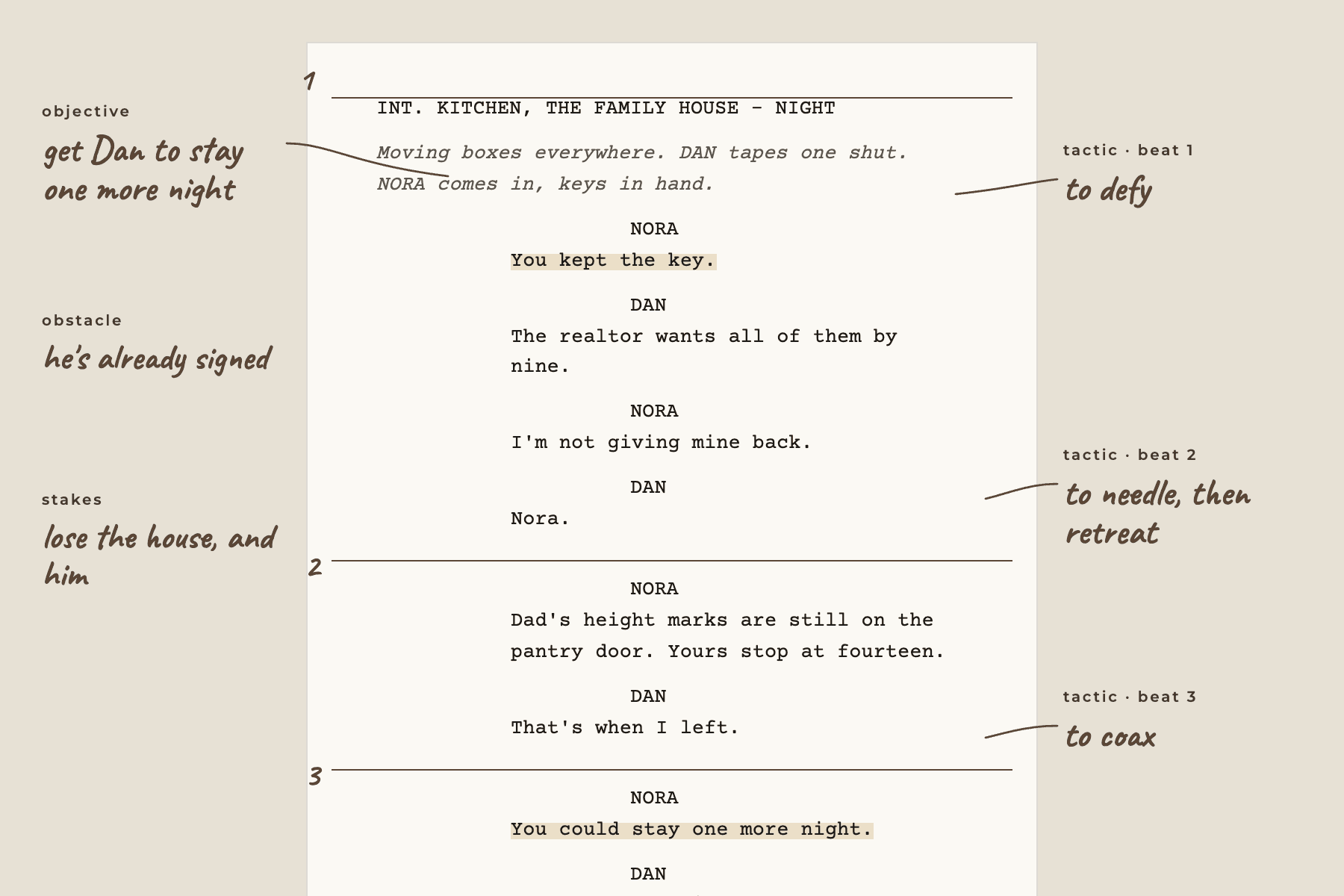
A simple, repeatable way for actors to break down any scene (objectives, obstacles, stakes, and beats) so you walk in specific instead of vague.
AuditionsGuide
Cold reading tips that actually work
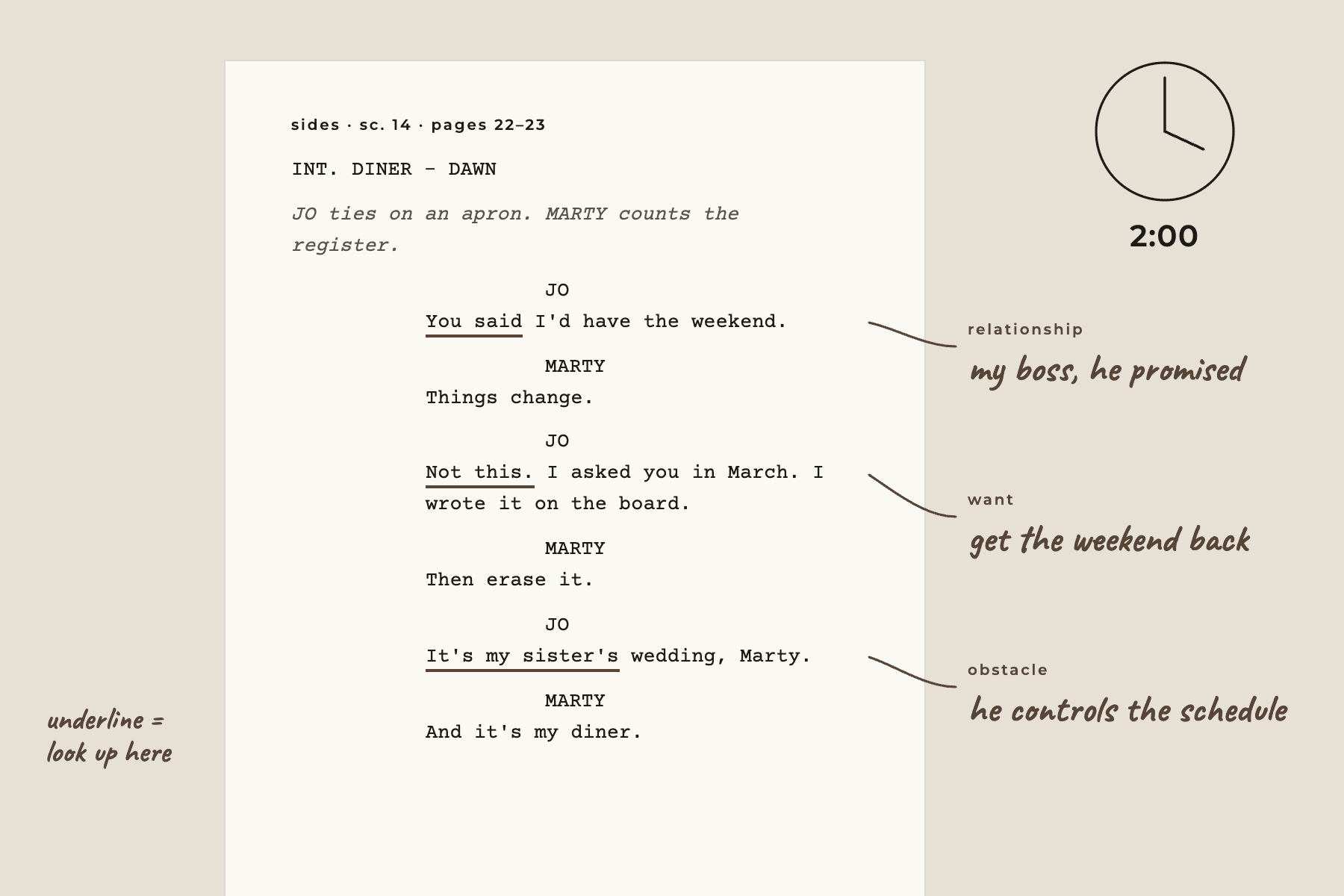
Practical cold reading tips for actors: how to make fast, specific choices, use the sides, and stay present when you get the scene minutes before the audition.