AuditionsGuide
Cold reading tips that actually work
A fast, reliable process for making specific choices when you get the sides minutes before you read, plus a timed drill to keep the skill warm.
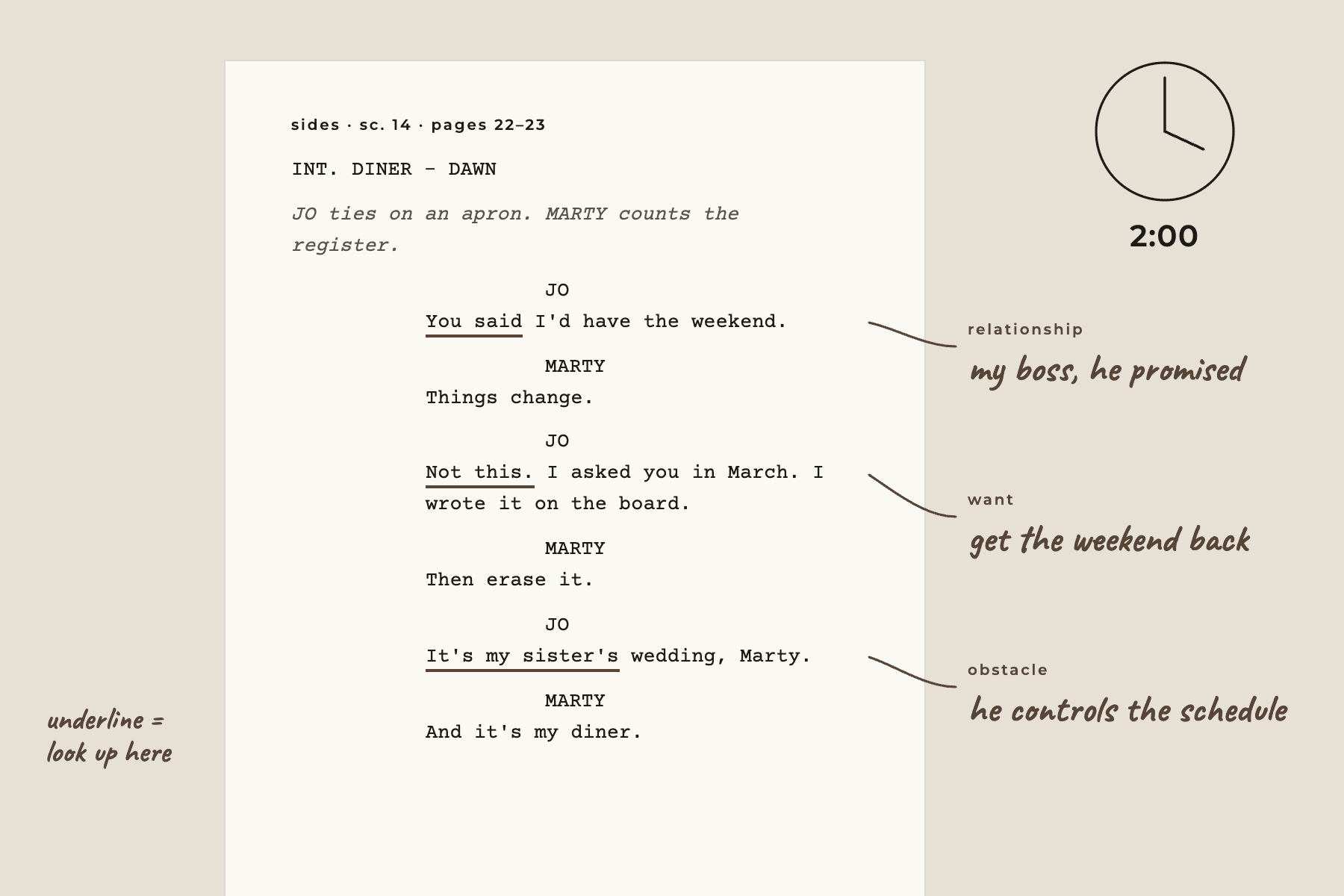
Cold reading is a skill, not a personality trait, which means you can get good at it. The actors who handle cold reads well aren't the ones with the best memory; they're the ones with a fast, reliable process for making choices under pressure. Here's that process, and a drill to practice it.
In the first 30 seconds, find three things
You rarely get long with the sides. Spend your first pass hunting for only three things:
- The relationship: who is this person to me?
- My want: what am I trying to get in this scene?
- The obstacle: what's in the way right now?
That's enough to play something specific. Everything else is a bonus.
Get your eyes off the page
The biggest cold-reading tell is an actor buried in the sides. Learn to grab a line, look up, and say it to the other person. Glance down for the next thought while your reader is talking, not while you are. It's hard to show listening and reacting if you never look up.
Make a bold choice, then adjust
A specific choice that turns out to be "wrong" is usually more useful than a safe, vague one, because it gives the room something to respond to. Commit to a clear want and a clear tactic. If the reader gives you something surprising, let it land and adjust. If you're given a redirect, take it fully. Showing that you can is often part of what's being assessed.
Use the room, not just the page
Whoever is reading with you is your scene partner. Play the scene at them. Their delivery, their pace, their energy: respond to it. A cold read comes alive the moment you stop performing the page and start playing the person across from you.
Practice cold reads on purpose
Cold reading stops being scary the same way anything does: through reps. Here's a drill that rehearses the whole process under time pressure.
Practice exercise
The timed cold-read drill
- Task
- Read an unfamiliar scene out loud after two minutes of preparation, then reflect on it.
- Time
- About 10 minutes per scene. Repeat weekly.
- Pick a scene you've never read: a play from the library, a free script archive, or sides swapped with a friend.
- Set a timer for 2 minutes. Find the relationship, your want, and the obstacle, and write each in three words or fewer at the top of the page.
- Set a timer for 1 minute. Underline the first few words of each of your lines; those are your launch points for looking up.
- Read the scene out loud, ideally with a partner or a recorded reader. Stay on the text as written.
- Take 2 minutes to note: how often did you look up? Did your want come through? What would you change in the room?
OutcomeA faster first pass, more time with your eyes up, and notes on what to try next time.
If you record the drill, watch it back once with the sound off. You'll see straight away how much of the read you spent looking at the paper.
Build the muscle between auditions
Cold reading rewards actors who have a process they can run fast. The best way to get fast is to run the full process slowly and often, on scenes you have time to prepare, until the short version becomes automatic.
Questions
What is a cold reading?
A cold reading is performing from a script you've had little or no time to prepare, often handed to you minutes before an audition. It tests instinct, listening, and how quickly you make specific choices.
How do you get better at cold reading?
Practice a fast breakdown (relationship, want, obstacle), keep your eyes up off the page as much as possible, and rehearse reading sides out loud regularly so the skill is warm when you need it.
Can I change the words in a cold read?
Only if the room says that's fine. Some auditions, especially for scripted TV and film, expect the text exactly as written, so check the instructions or ask. When in doubt, stay on the words and work on lifting them off the page.
Written by
The people who design Vitoniou's journals and workbooks for actors and film creatives. We write these guides to teach the methods our printables are built around, and we update them when we improve them.
Read next
Scene studyGuide
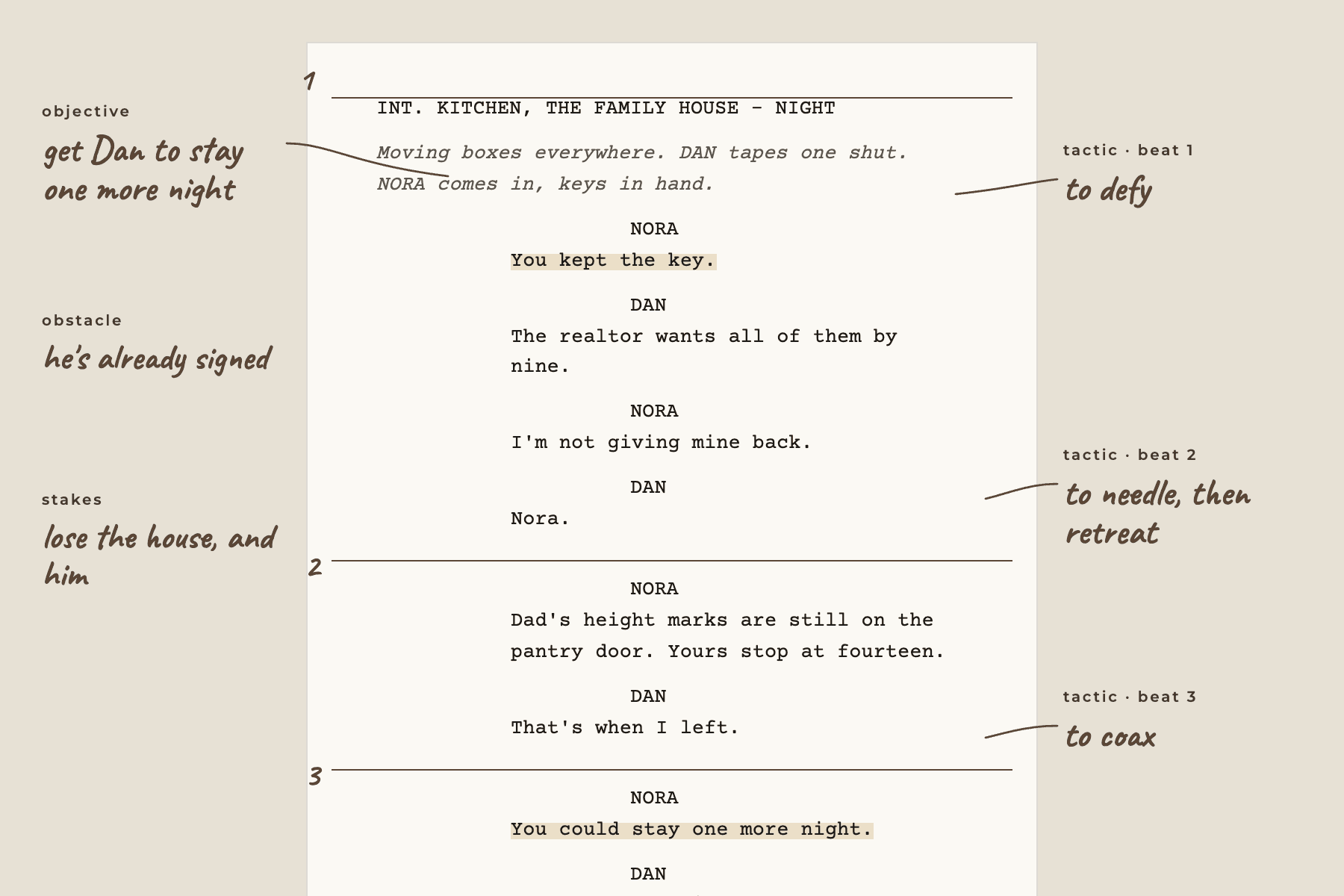
How to break down a scene, step by step
A simple, repeatable way for actors to break down any scene (objectives, obstacles, stakes, and beats) so you walk in specific instead of vague.
Character workWorksheet
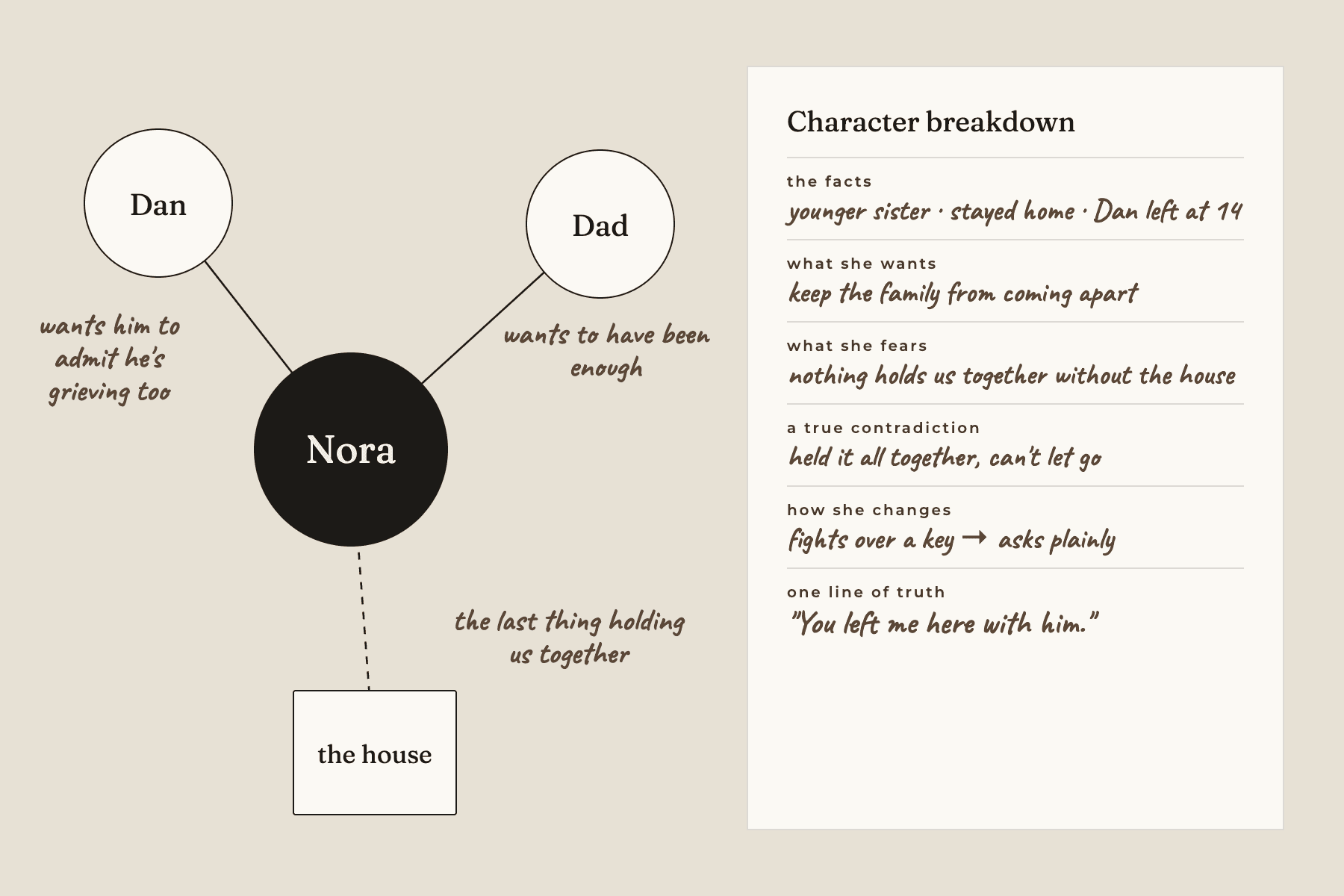
The actor's character breakdown worksheet
A free printable character breakdown worksheet for actors: the questions that turn a role on the page into a specific, living person you can play.