AuditionsGuide
How to track your auditions (and learn from them)
A six-field log, a monthly three-question review, and a worked month of sample entries showing how one repeated note becomes one practice decision.
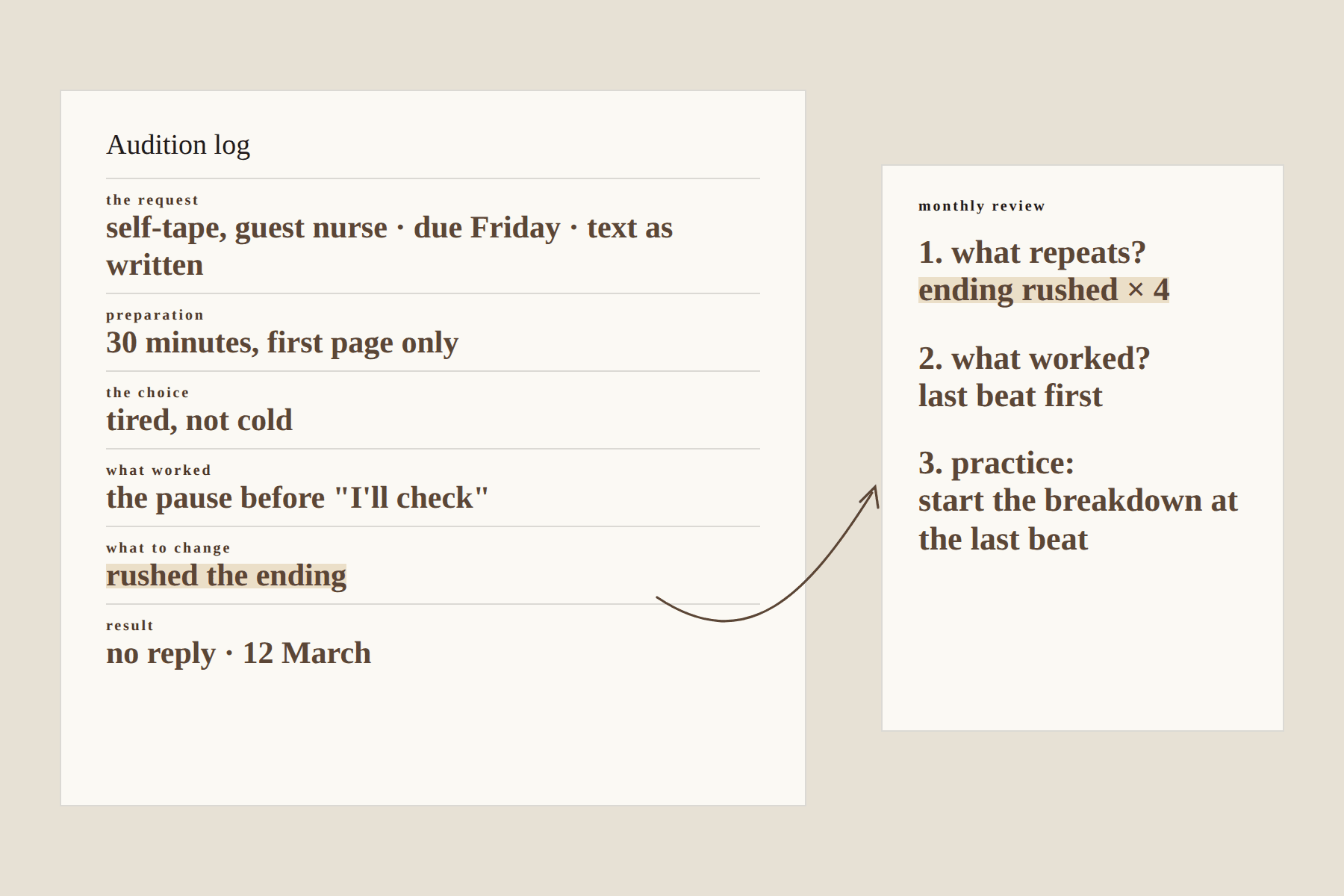
Write six things down for every audition: what you were asked for, how you prepared, the choice you played, what worked, what you would change, and what happened. Do the first before you start, the middle three within the hour, and the last whenever you hear. Then read the whole log once a month and ask three questions. That is the method, and the rest of this guide shows how to run it and what a month of it looks like.
Why the result is the weakest column
Most audition trackers are organized around outcomes: submitted, auditioned, callback, booked. That is useful for knowing where things stand. It is a poor teacher.
ScreenSkills describes how the process works on the casting side: a casting director sees actors and presents candidates, and the final decision rests with the producer and director. Many people and many needs sit between your tape and the answer. A missing reply might mean the role was filled from a list you never saw, the tone was wrong for reasons unrelated to you, or the project changed. You can't tell which from the outside.
So the log splits your information into two kinds:
- Things you control: how you prepared, which choice you played, whether you followed the instructions, how you felt in the read.
- Things you don't: who else was seen, what the producer wanted, what the budget allowed.
Learn from the first kind. Record the second kind, but hold it loosely.
The six fields
Each field has a moment when it is easiest to fill in. Using that moment is most of the method.
| Field | What to write | When |
|---|---|---|
| 1. The request | Project, role, who asked (casting office or agent), deadline, what the instructions say about the text, versions and delivery | When the request arrives |
| 2. Preparation | How long you had, what you actually did with it | After you finish preparing |
| 3. The choice | One line: what your character wants in the scene and the tactic you chose | Within the hour |
| 4. What worked | One specific moment that felt true or alive | Within the hour |
| 5. What to change | One thing you would do differently with the same sides | Within the hour |
| 6. The result | What happened and the date you heard, including "no reply" | When you hear |
A few notes on why these fields:
The request matters because instructions get lost between the email and the room. If the text instructions or delivery details are unclear, a quick written question to the person who sent the request is better than a guess. You'll also have a record of what you were told.
The choice is the field most actors skip, and the one that makes later reflection possible. "I played her tired, not cold" tells you something in a month. "It went okay" doesn't. If you use the method from how to break down a scene, this is a one-line summary of your objective and tactic.
What worked and what to change are the heart of it. The free audition tracker's four reflection prompts cover the same ground: what landed, what you would do differently with the same sides, what the room seemed to want, and one thing to practice next.
A worked month of auditions
Here is a month of sample entries for an invented actor. This is a Vitoniou teaching example: the projects, roles and results are made up for this guide, and eight entries are far too few to count as data. It shows how the log reads, not how auditions go.
| # | Date | Project and role (sample) | Format | Prep | After-the-room note | Result |
|---|---|---|---|---|---|---|
| 1 | 2 Mar | Streaming drama, guest nurse | Self-tape | 3 hours | Tired, not cold, felt true. Slate took four tries. | No reply |
| 2 | 4 Mar | Short film, lead | In the room | 1 day | Looked at the door in the second beat. Listening was good at the end. | Callback |
| 3 | 9 Mar | Commercial, parent | Self-tape | 30 minutes | Smile never dropped. Rushed the ending. | No reply |
| 4 | 11 Mar | Short film, callback | In the room | 2 hours | Took the slow-down note. Ending still rushed. | Not selected, told kindly |
| 5 | 16 Mar | Audio drama, doctor | Self-tape | 2 hours | Ran out of breath. Rushed the ending. | No reply |
| 6 | 18 Mar | Feature, supporting | Video call | 45 minutes | Eyes up all scene. Missed the change in the last line. | Waiting |
| 7 | 24 Mar | TV episode, receptionist | Self-tape | 20 minutes | Didn't check whether the text could change, so stayed on it. | No reply |
| 8 | 30 Mar | Web series, lead | In the room | 1 day | Prepared the last beat first. Ending landed. | Offer |
Worked example · the monthly review
At the end of March, our sample actor asks three questions of the log.
1. What shows up more than once in my own notes? Four of the eight notes mention the ending: rushed three times, and missed once. Preparation time doesn't explain it, because two of the rushed endings came after two hours of work. The better guess is that the actor prepares from the top of the scene and runs out of preparation before reaching the end.
2. What did I do on the days it went well? In entry 8 the actor prepared the last beat first. Entry 2 also shows strong listening at the end, after a full day with the material.
3. What is the one thing I will practice? For April: on every request, start the breakdown at the last beat, and read the final three lines aloud twice before the first take.
Look at what the review doesn't say. Five of the eight results are "no reply", and the log can't explain why. One offer follows the one change, which is encouraging but isn't proof the change caused it. The review's decision comes from the actor's own notes, which are the part of the log they can trust.
Run the monthly review
Set a recurring time, such as the last Sunday of the month, and give it twenty minutes. Read the log from top to bottom, then answer three questions in writing:
- What shows up more than once in my notes? Look for repeated words: rushed, stiff, looked away, forgot the instructions.
- What did I do on the days that felt good? Look for a habit you can repeat on purpose.
- What is the one thing I will practice before the next audition? One, not five. Put it where you will see it when the next request arrives.
When you read results, keep the sample size in mind. A few entries can reveal a habit in your own notes. They can't tell you what casting teams think of you, and they can't rank you against anyone. If a month has been quiet, the log's job is to show you what you did with the auditions you had, not to grade you. For a faster version of the practice itself, the timed drill in cold reading tips pairs well with a monthly "one thing to practice".
Paper, spreadsheet or app
The best tool is the one you will open after a disappointing audition. Here is how to choose, based on how each format behaves rather than on testing particular products (we haven't tested any audition-tracking apps for this guide).
| Format | Strength | Watch out for |
|---|---|---|
| Printed page | Quick, no screen, sits beside your sides | Hard to search; easy to lose; limited room per entry |
| Spreadsheet | Searchable and sortable, works on a phone | Tempting to add columns until you stop using it |
| Notes app | Fast to write from anywhere | No structure, so fields get skipped |
Whatever you pick, keep the six fields the same. The free tracker below gives you the weekly log (date, project and role, casting, result) and the four reflection prompts on one printable page. The request, preparation and choice fields from the table above can go in the margin or in your own sheet.
Set it up in twenty minutes
Practice exercise
Back-fill your last three auditions
- Task
- Build your log from three recent auditions, then run your first mini review.
- Time
- About 20 minutes, once.
- Pick a format: print the tracker, open a spreadsheet, or start a note. Add the six fields as headings.
- Choose your three most recent auditions, including any you turned down or missed.
- For each, write what you remember in each field. Where you can't remember, write "don't know". That gap is the reason to log in the moment from now on.
- Read your three after-the-room notes together. Is there a word that repeats?
- Write one sentence for the next request: "Before I record or read, I will ___."
- Set a calendar reminder for the end of the month: "Audition review, 20 minutes".
OutcomeA working log with real entries, and one practice decision for your next audition.
Where this fits in the bigger picture
A per-audition log answers "how am I reading?" A different set of questions, such as where you are submitting, how many submissions go out each month and which channels lead to auditions, sits one level up. The log feeds that view: at the end of a quarter, your entries show how many requests came from each source and which kinds of role you were seen for. For the craft side of preparation, start with how to break down a scene and the character breakdown worksheet.
Questions
What should an audition log include?
Six things: the request (project, role, who asked, deadline, instructions), your preparation, the choice you played, what worked, what you would change, and the result with the date you heard. The first two are quick to fill in, and the middle three are the ones most worth writing within the hour.
How many auditions do I need before the log shows a pattern?
There is no magic number. A handful of entries can show a repeated habit in your own notes, such as always rushing a final beat. Results need far more entries than most actors have, and many other things affect them, so read results as slow background information and use your own notes for decisions.
Should I log auditions I turned down or missed?
Yes, with one line on why. A log that only holds the auditions you attended hides the ones where the deadline, the instructions or the role were the problem, and those reasons are useful when you plan your next month.
Do I need an app?
No. A printed page, a spreadsheet and a notes app all work if you fill them in the same day. Choose the one you will open at the end of a bad audition, not the one with the most features.
Written by
The people who design Vitoniou's journals and workbooks for actors and film creatives. We write these guides to teach the methods our printables are built around, and we update them when we improve them.
Sources
- ScreenSkills. Casting director. ScreenSkills. Describes how casting directors review actors, run auditions and present candidates, with the final decision resting with the producer and director. UK film and TV drama framing.
Read next
AuditionsGuide
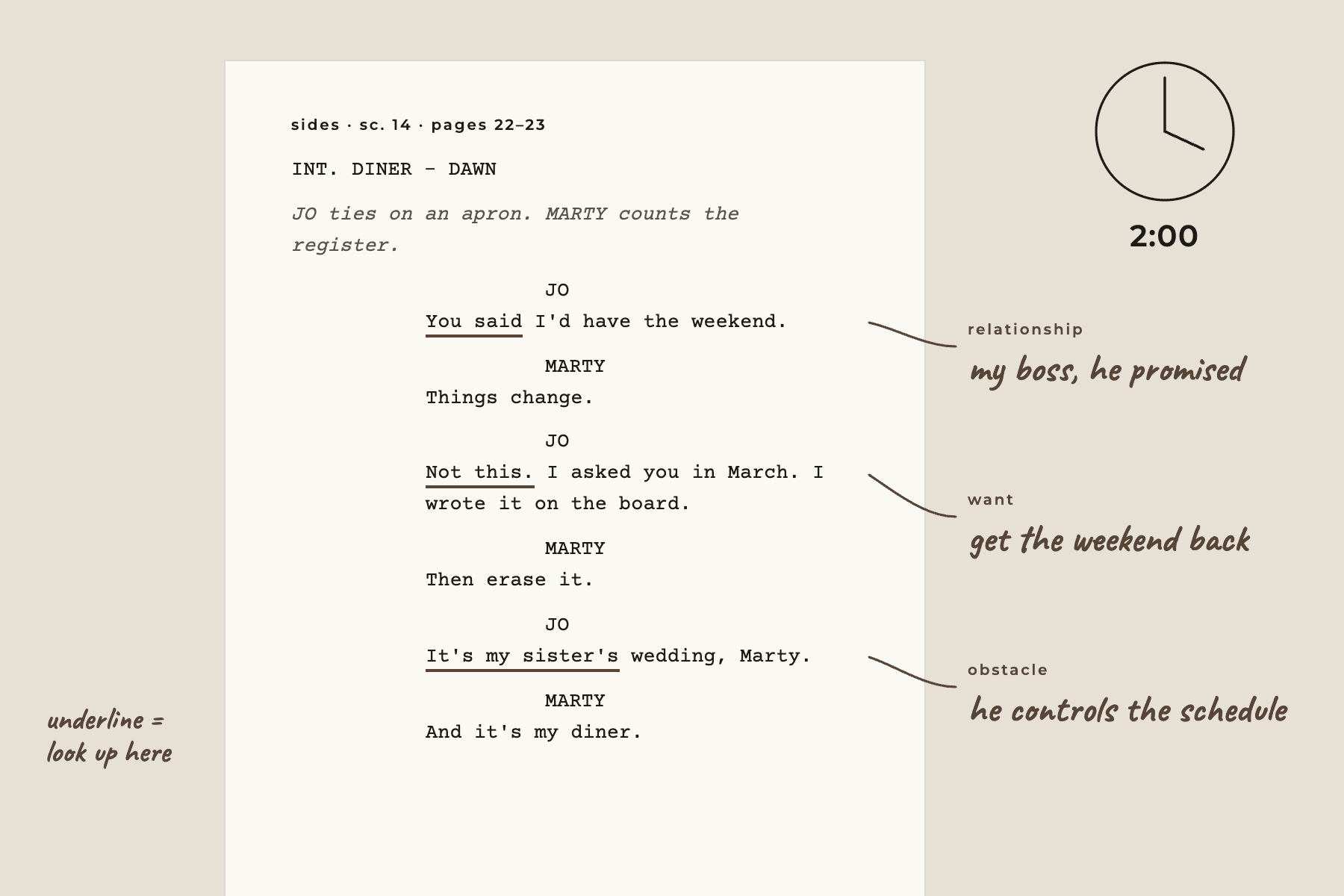
Cold reading tips that actually work
Practical cold reading tips for actors: how to make fast, specific choices, use the sides, and stay present when you get the scene minutes before the audition.
Scene studyGuide
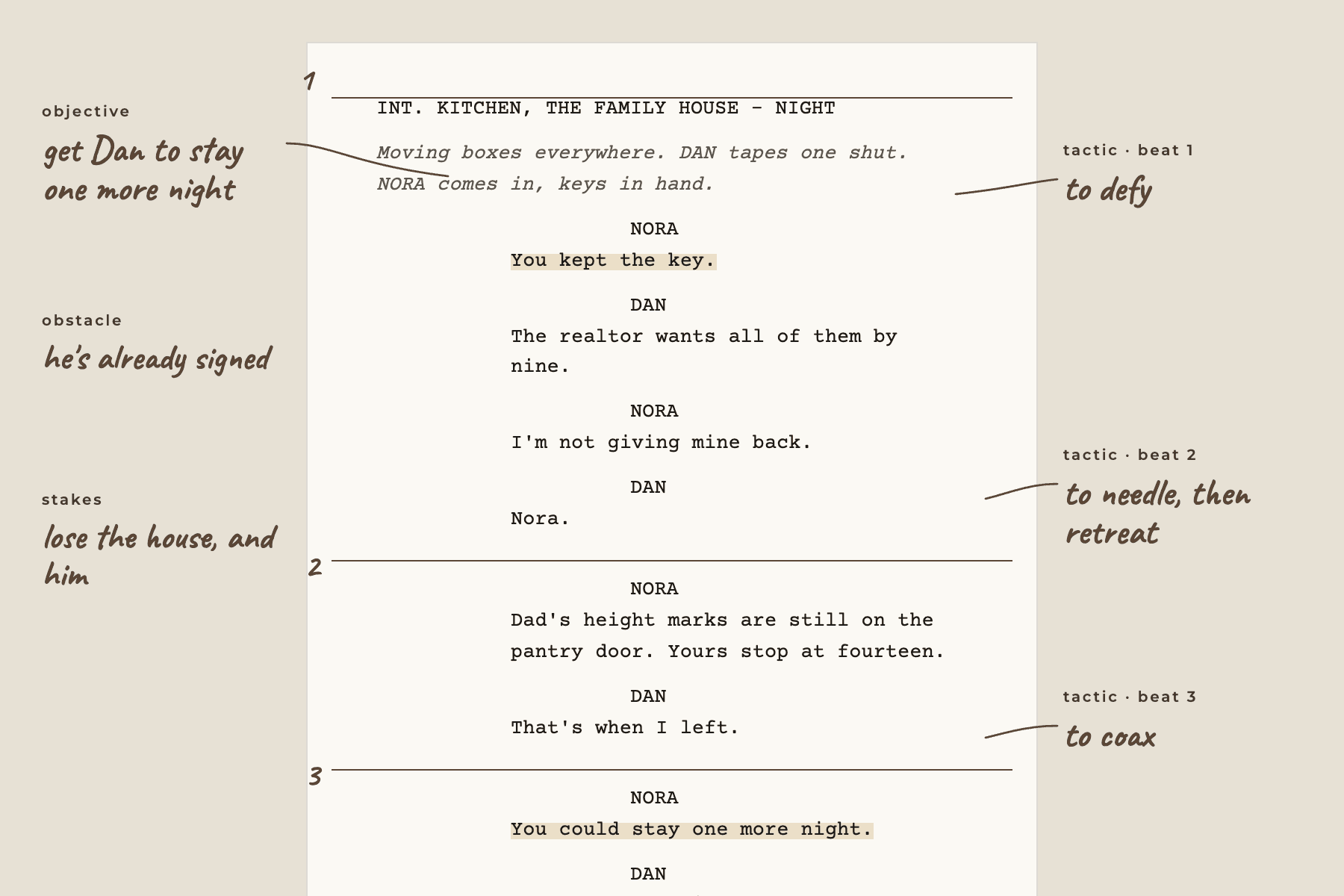
How to break down a scene, step by step
A simple, repeatable way for actors to break down any scene (objectives, obstacles, stakes, and beats) so you walk in specific instead of vague.
Character workWorksheet
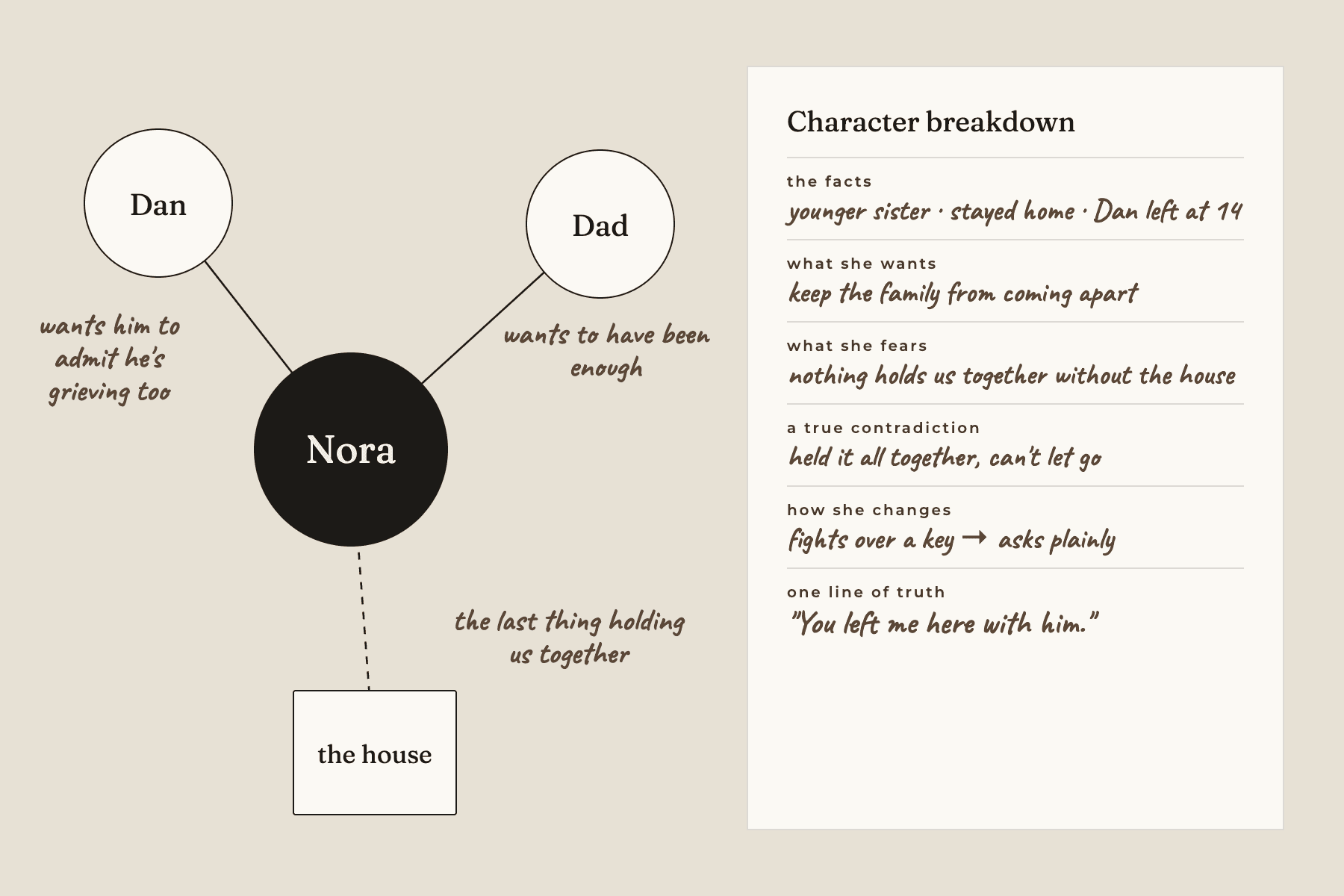
The actor's character breakdown worksheet
A free printable character breakdown worksheet for actors: the questions that turn a role on the page into a specific, living person you can play.